
Cassava is Northern Uganda’s quiet insurance crop: drought-hardy, storable in the ground for years, and increasingly a cash and industrial crop, not just food. But two diseases can erase a whole field, and most farmers still grow low-yielding local types. The fix is well understood: disease-resistant varieties and clean planting material. This guide shows how.
- Plant disease-resistant NAROCASS 1 / NAROCASS 2 (or NASE 14 / 19), not local types.
- Grow from clean cuttings of healthy plants: this is the key disease control.
- Improved varieties yielded 2–5× the local check in West Nile trials.
- CMD and CBSD are the two threats, both spread by whitefly and infected cuttings.
Choose a disease-resistant variety
This is the decision that matters most. Local landraces are highly vulnerable to the two big cassava diseases; NARO’s crops institute (NaCRRI) has released improved varieties bred to resist them. (The improved series is officially NAROCASS, sometimes written NAROCAS.)
| Variety | Released | Disease profile | Note |
|---|---|---|---|
| NAROCASS 1 | 2015 | Resists CMD; tolerates CBSD | Highest-yielding in West Nile trials |
| NAROCASS 2 | 2015 | Resists CMD; tolerates CBSD | Bred for dual disease tolerance |
| NASE 14 | 2011 | Resists CMD; now succumbing to CBSD | The most widely adopted in West Nile |
| NASE 19 | 2011 | Resists CMD; now succumbing to CBSD | High-yielding, mosaic-resistant |
Where brown streak is bad, choose NAROCASSIn a West Nile (Adjumani) field trial, NAROCASS 1 and the NASE varieties resisted disease and yielded far above the local "Alifasia" check. Where brown streak pressure is high, NAROCASS 1 and 2 hold up best, because they resist mosaic disease and best tolerate brown streak.
Plant clean cuttings the right way
Cassava is grown from stem cuttings, and where you get them from is itself a disease-control decision: infected cuttings carry the disease into your new field.
Take clean cuttings
Use cuttings about 20–25 cm long with several nodes, 1.5–2 cm thick, cut from healthy 9–18-month-old plants. Avoid very old plants and the soft green stem tip. Plant within about 10 days of cutting.
Space at 1 m × 1 m
One cutting per hole, about 4,000 plants per acre. Plant 6–10 cm deep. About 8 bags of cuttings (500 each) plant an acre.
Weed and gap-fill
Weed 3–4 times depending on weed pressure, and replace any dead plants about a month after planting. You can intercrop with beans or maize once the cassava has germinated.
Harvest from ~12 months
Most varieties give a good harvest around 12 months. Cassava can be left in the ground for 2–3 years, so harvest as you need it.
The yield gap is enormous
Few crops show the value of improved varieties as starkly as cassava. In the West Nile field trial, the local variety yielded a fraction of the improved ones.
Fresh-root yields, Adjumani (West Nile) on-farm trial, 12 months after planting. Improved varieties yielded roughly 2–5× the local check.
For context, Uganda’s national average cassava yield is only around 5 t/ha, so the gap between what most farmers get and what clean, improved planting material can deliver is several-fold.
Beat the two diseases
CMD and CBSDCassava mosaic disease (CMD) yellows and distorts leaves; cassava brown streak disease (CBSD) streaks the stems and, worst of all, rots the roots brown, ruining the part you sell and eat. Together they can cause total loss. Both spread by whitefly and by infected cuttings. Your defence: a resistant variety + clean planting material from a healthy field.
A crop with a growing market
Most of Uganda’s cassava is still eaten directly, flour blended with maize, sorghum, millet or soya, but cassava has a long industrial future: starch for food, packaging, plywood, animal feed and brewing. Government lists it among priority strategic crops. For now, the surest gains for a northern farmer are the basics: a resistant variety, clean cuttings, good spacing and weeding, then sell in volume through a group.
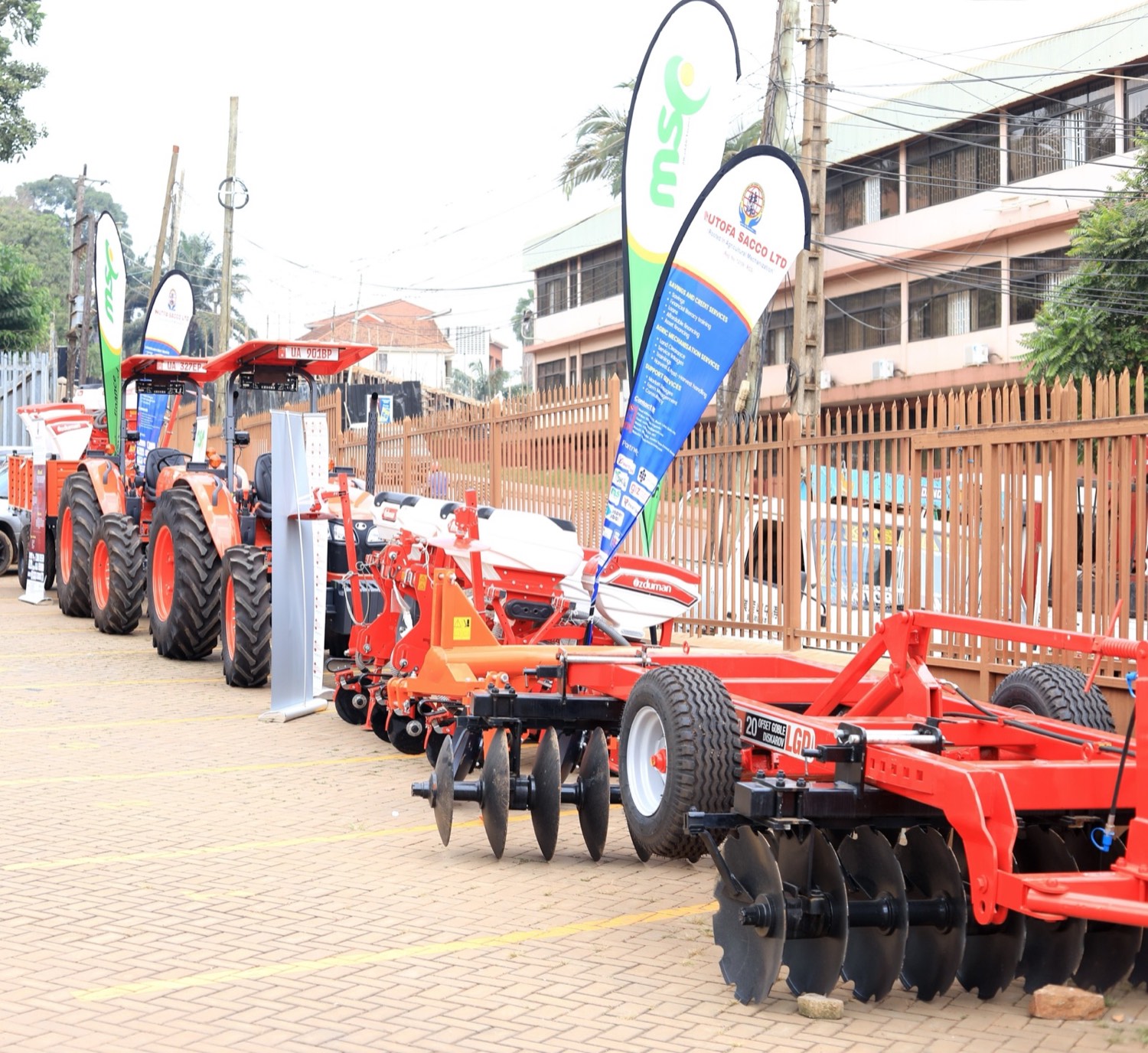
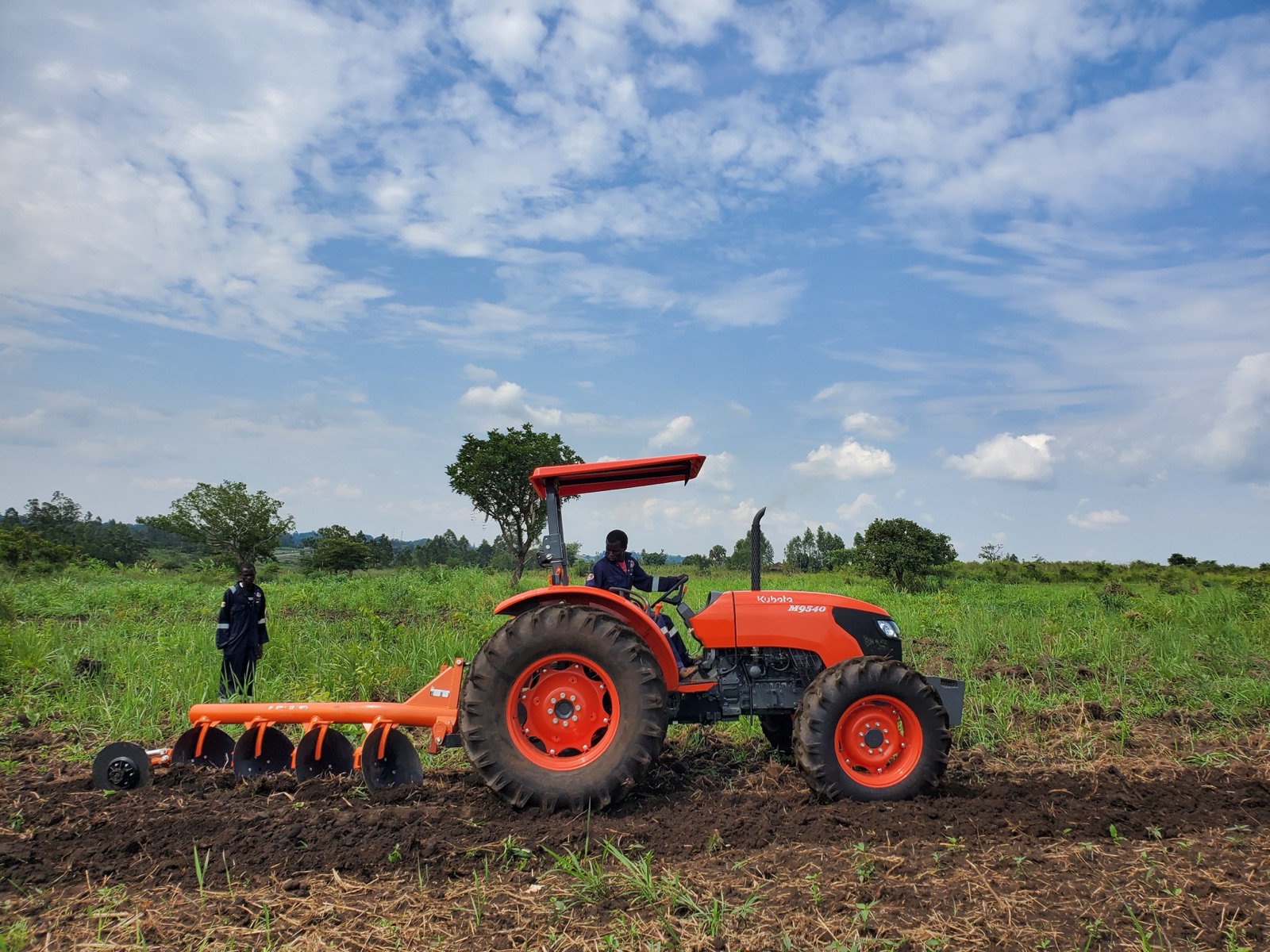
Prepare the land with mechanized ploughing and ridging, and access clean planting material and markets through the cooperative. See NUTOFA’s services or become a member.
- Frontiers in Plant Science: NAROCASS 1/2 (2015) and NASE 14/19 (2011) release years and disease resistance, 2021.
- Journal of Agricultural Science (Adjumani, West Nile on-farm trial): fresh-root yields by variety vs local check, 2021.
- NaCRRI Cassava Agronomy Brief; Operation Wealth Creation extension guide: cuttings, spacing (1 m × 1 m, ~4,000/acre), planting depth, weeding, maturity.
- Frontiers in Sustainable Food Systems: CMD and CBSD as the two major threats (up to total loss; whitefly and cutting transmission), 2022.
Frequently asked questions
-
Choose varieties bred for disease resistance. NAROCASS 1 and NAROCASS 2 (released 2015 by NaCRRI) resist cassava mosaic disease and tolerate cassava brown streak disease, and gave the highest yields in West Nile field trials. NASE 14 and NASE 19 (released 2011) resist mosaic disease and are widely grown, but although released as brown-streak-tolerant they have increasingly succumbed to it in the field, so where brown streak is severe, the NAROCASS varieties are the safer choice.
-
Cassava is grown from stem cuttings, not seed. Use cuttings about 20–25 cm long with several nodes, taken from healthy 9–18-month-old plants, and plant within about 10 days of cutting. Plant at 1 m by 1 m spacing, about 4,000 plants per acre, at a depth of 6–10 cm.
-
Cassava mosaic disease (CMD) and cassava brown streak disease (CBSD). Together they can cause up to total crop loss. Both spread through whiteflies and through infected cuttings, so the single most important control is planting clean, disease-free material of a resistant variety.
-
Around 12 months for a good harvest, though some quick varieties mature in 6–7 months. A major advantage of cassava is that it can be left in the ground for two to three years, acting as a food-security reserve you harvest when you need it.